167. Tweed Plane
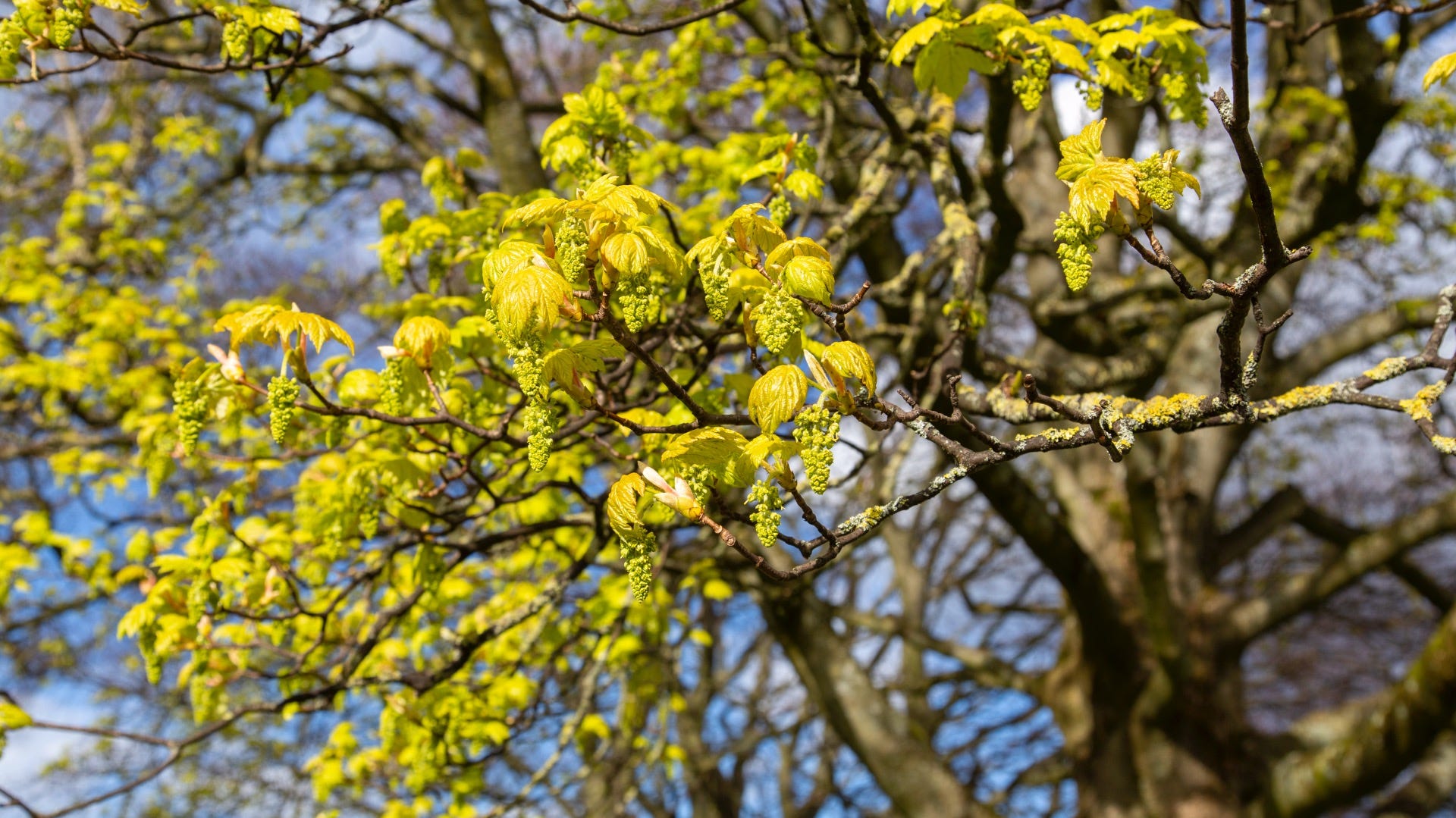
An old sycamore with acid yellow spring leaves is worth seeking out in the Borders.

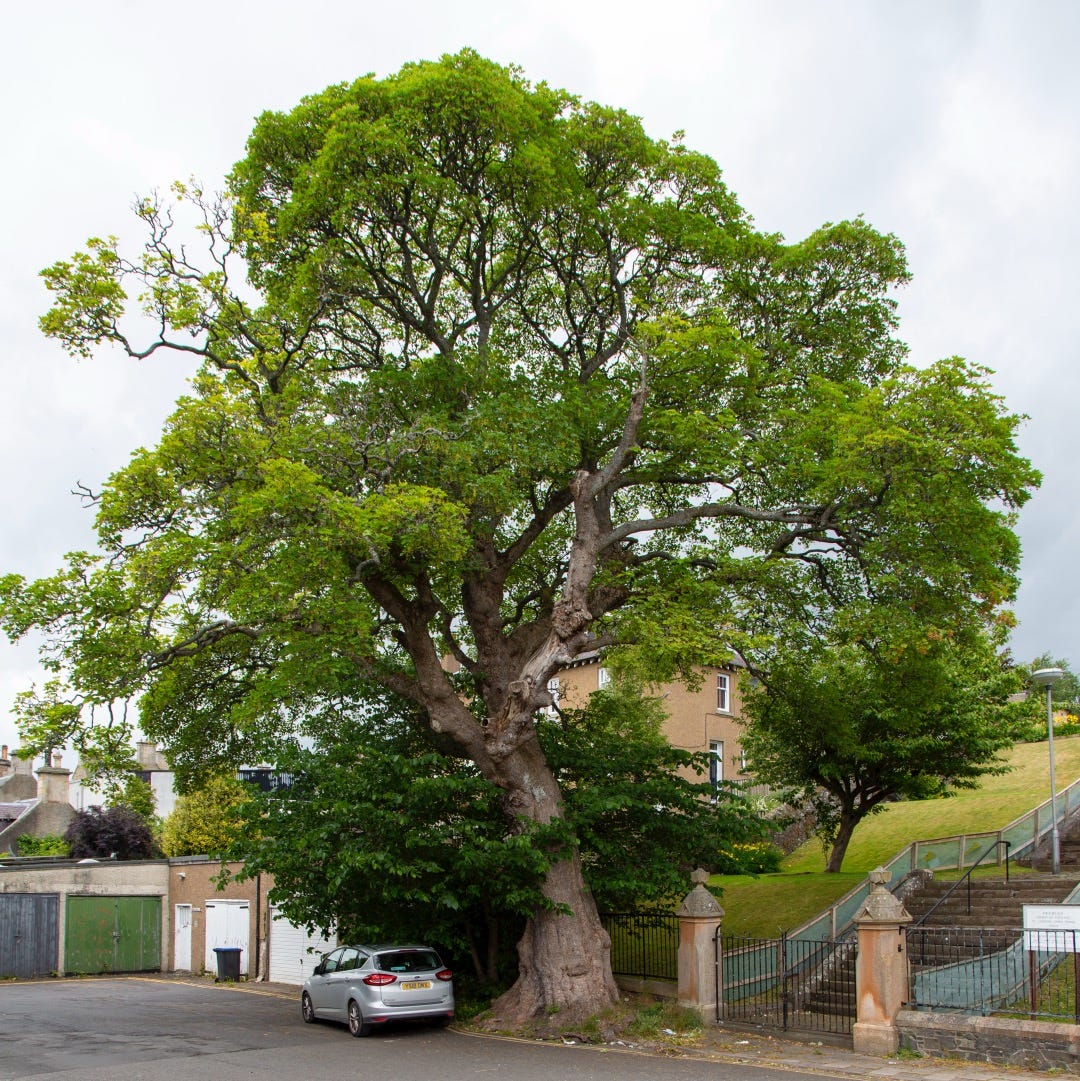
Charming Peebles has always attracted refugees from Edinburgh, and that applies to trees as well as people. A very old Corstorphine plane – bigger and older than any in Edinburgh – grows out of the pavement on Tweed Green. It is so fat that double yellow lines curve to accommodate it in what is a particularly awkward spot.
Corstorphine plane?
I should explain… Corstorphine, for those who don’t know, is an Edinburgh suburb where an eponymous castle once stood. Today, just a dovecot survives, and until a winter storm in 1998 felled it, a venerable old tree, said to have been over 500 years old, grew there. That tree was a sycamore, a maple species sometimes known as a ‘plane’ in Scotland because its leaves resemble those of a London plane, a rather rare tree in the north. To add to the confusion, I should mention that ‘sycamore’ is a name appropriated from a species of fig (which certainly doesn’t grow in Scotland), and that in the US, the plane species of the east coast, Platanus occidentalis, is also known as a sycamore.
The Corstorphine plane then, is a cultivar of Acer pseudoplatanus which was first recorded from a Scottish castle, and can occasionally be encountered, particularly around Edinburgh. The key feature of a Corstorphine plane is its early spring leaves, they burst into leaf in March and they have a very striking acid yellow colour which gradually fades as the leaves mature. By high summer, they are barely distinguishable from a regular sycamore, so compared with showier cultivars, ‘Leopoldii’ for instance, with variegated leaves which persist throughout the year, they are uncommon.
Species details
Corstorphine plane
Acer pseudoplatanus ‘Corstorphinense’
Where to find it
Tweed Green, Peebles EH45 8AP
///conquests.submitted.amplifier | 55.650995, -3.188193