

185. Prodigious Pear
The spring is not all about cherry blossom as this huge pear tree in Lincoln will attest.

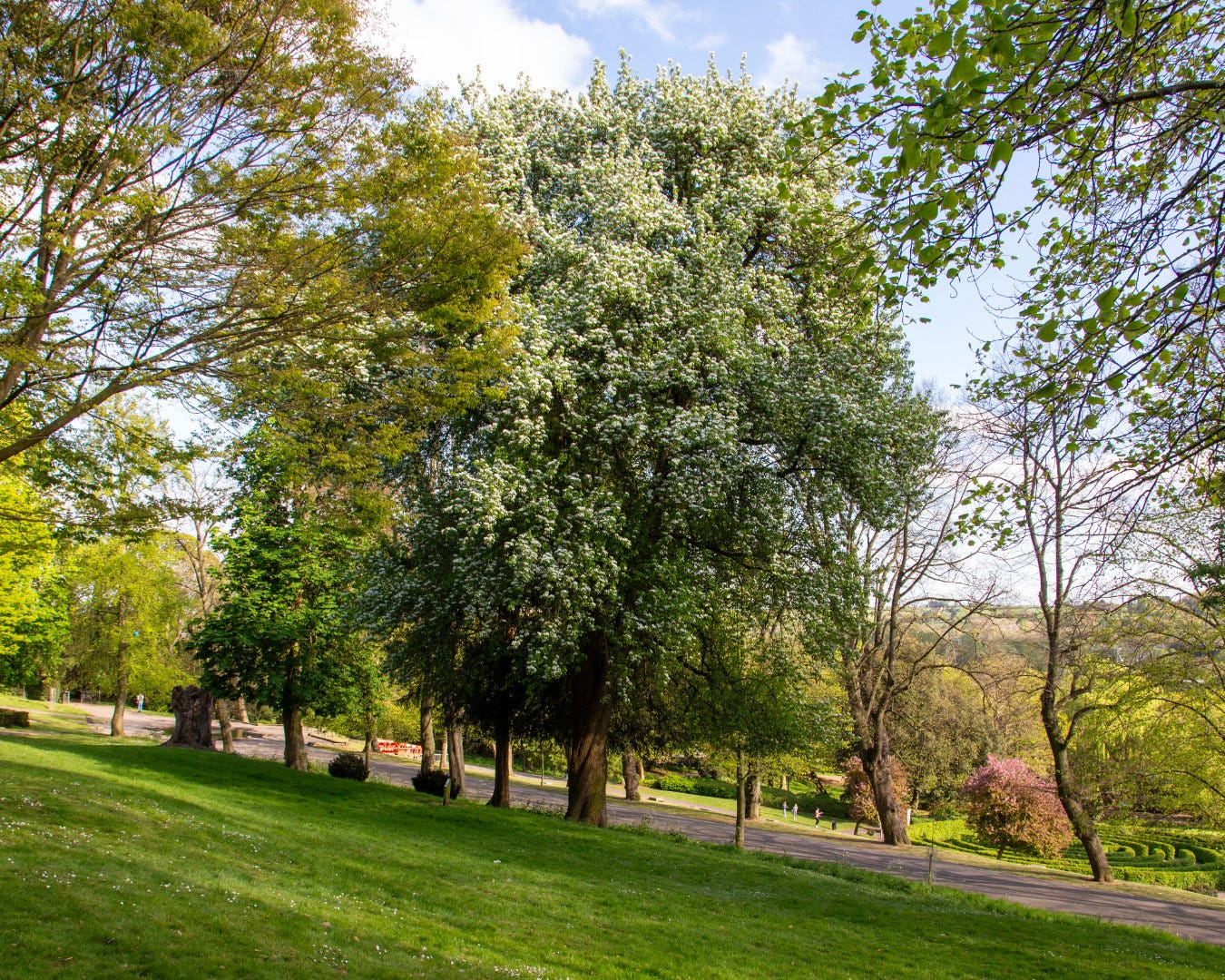
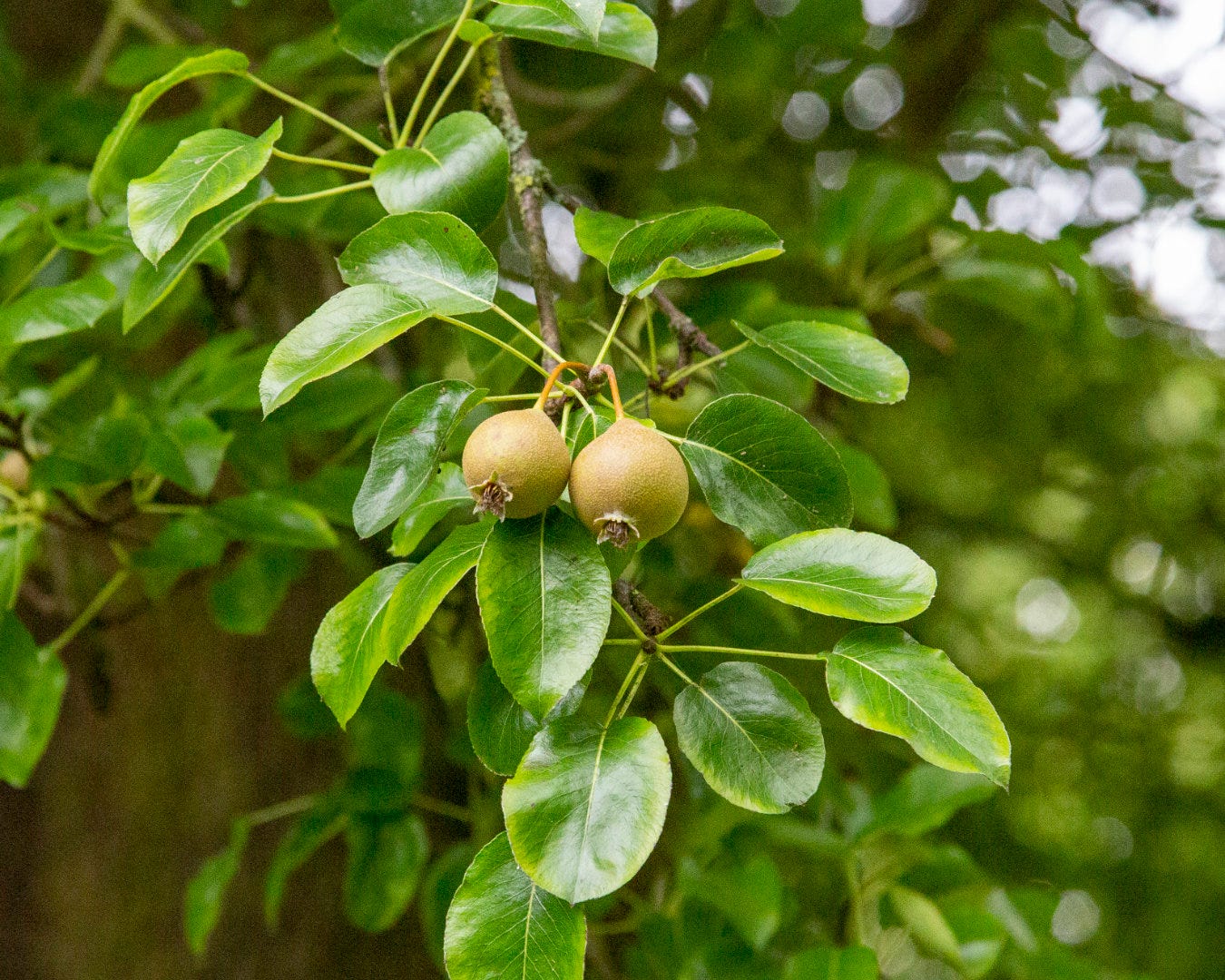
In high summer, the giant old pear tree in Lincoln Arboretum could be mistaken for a beech. Its leaves are deep green and its developing fruit can resemble ripening nuts. The cracked bark, however, confirms this is no beech. It produces small, hard, unpalatable fruits, so the best time to visit is in early spring when white blossom covers the canopy.
Species details
Pear
Pyrus communis ssp. sativa
Where to find it
The Arboretum, Lindum Terrace, Lincoln LN2 5RT
///piano.miss.stiff | 53.232064, -0.525158
Pear notes
Apple and cherry trees are perhaps more common than pears, and the ornamental varieties are certainly more conspicuous in spring, but pears are worth looking out for too. They grow larger and can live longer than other fruit trees, becoming stately beings that also produce showy blossom. They have long been cultivated for their fruits, but, like apples, they do not grow true to their variety from pips, so growing a pear from seed can be a surprise. A frequent ornamental pear tree is known as ‘Beech Hill’ which has fine blossom and small, hard fruits. The Lincoln Arborteum tree is not this variety, but it is not a tree that produces dessert fruits either so it is a mystery, nameless pear.

I love my ornamental pear. I hadn't considered planting one before, until we went shopping for a suitable tree to plant where we buried our dogs ashes. It's a 'pyrus calleryana' and we chose it simply because we saw words like 'persistent' and 'glossy' on the description - and since that described our dog, we went for it. It's in full blossom right now and it's so pretty.