


A Swings and Roundabouts post. I became aware of how interesting parks are having visited hundreds across Britain and Ireland looking for remarkable trees. I can confirm that our parks are full of great trees, but I can also confirm that our parks are fascinating. Each is unique and each has a great story to tell.
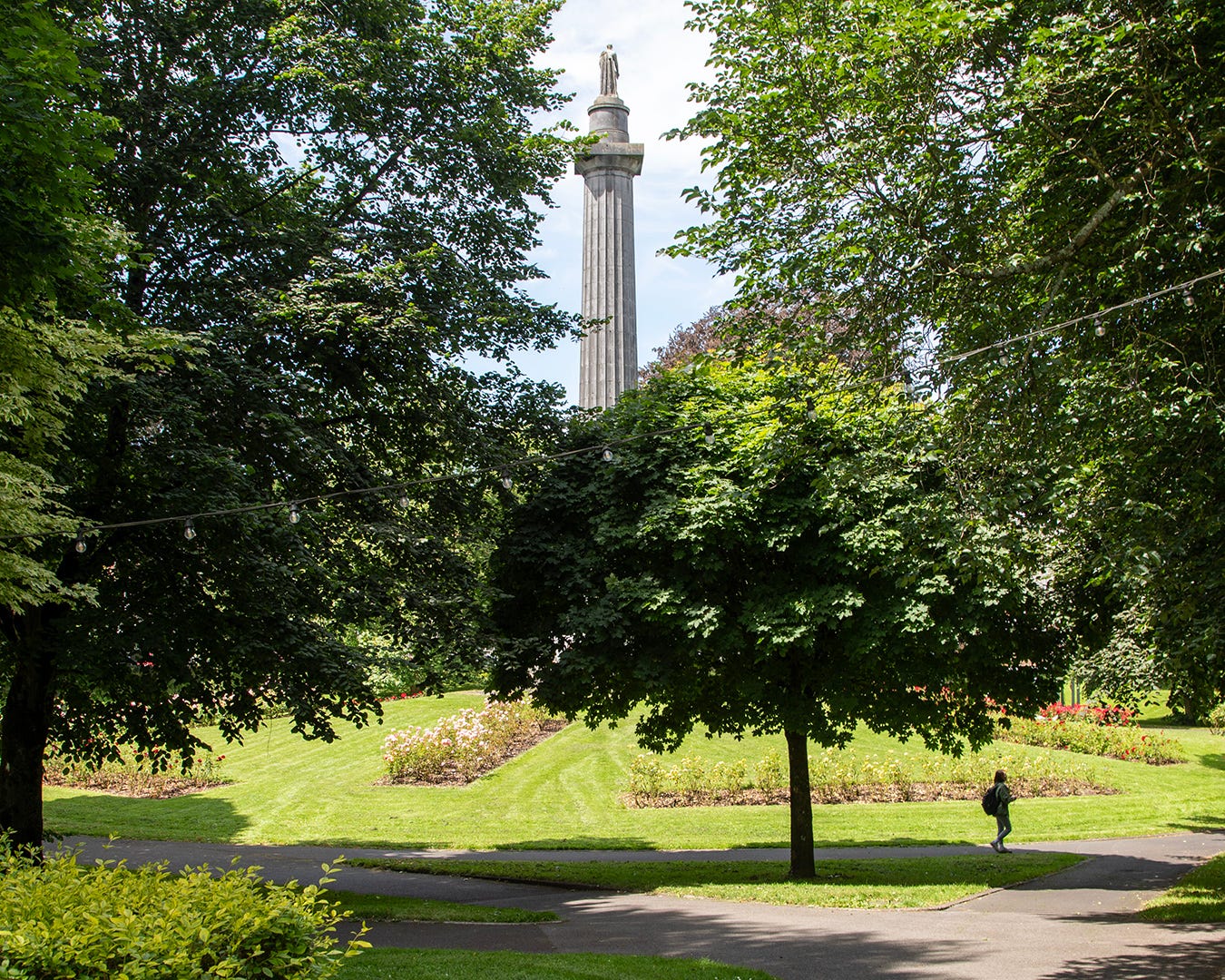
There are several ‘People’s Parks’ gracing towns and cities across Britain and Ireland. They are a Victorian invention, parks designed for all the townspeople to enjoy, popping up in places like Halifax, Banbury and Grimsby in England, and in Ireland, there’s one in Dun Laoghaire, one in Waterford and another in Ballymena. But the subject of this post is the People’s Park in Limerick.
After Dublin, Belfast and Cork, Limerick is the fourth largest urban area on the island of Ireland, a bustling city straddling the River Shannon at its lowest bridging point. It was established by vikings and has some fine Norman architecture, but it was the Georgians who gave the modern city centre its grid of streets as well as many handsome brick terraces. The Georgian centre of Limerick is known as Newtown Pery, named for its champion, Anglo-Irish politician, Edmund Sexton-Pery.
No Georgian city is complete without a garden square or two, and in Pery’s 1769 masterplan for Limerick, one was planned for a residential development to the south of the new city centre. It did not become reality until the following century, well after Pery’s death, when property speculators started developing Pery square. The intention was that the gardens at its heart would be accessible by keyholders, residents of the elegant terraces that would eventually surround it. By 1829, the Spring Rice Monument1 had been built, and in 1835 construction began on the first houses.
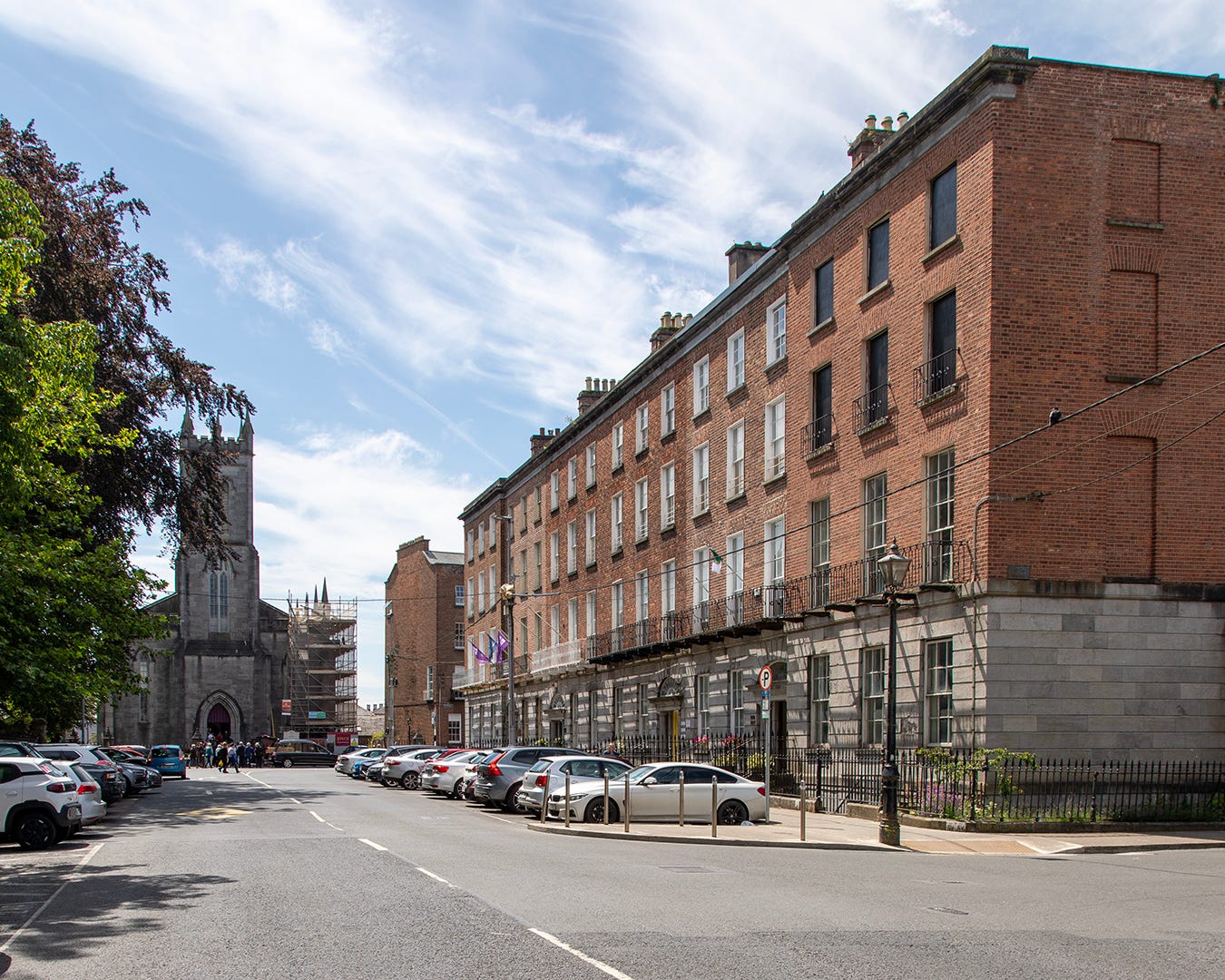
At the same time, the Irish economy went into decline, and the catastrophic mid nineteenth century Great Famine followed. As a result, Pery Square did not develop beyond this terrace. Beyond the locust years, it was the 1870s when the garden square and surrounding land was leased to Limerick Corporation for use as a public park. Money for the extended park was raised through public subscription and in 1877 (ish – dates are a little sketchy), and to great fanfare, the People’s Park opened.
It is interesting to consider the motivations for developing a public park, one whose name, the People’s Park is definite about its intended use by the people, a term I think we can take to mean the entire population of Limerick. This is in sharp contrast to garden squares which were exclusive, locked places intended for a privileged few. Limerick’s People’s Park opened in 1877 which puts it in the vanguard of municipal park openings in Ireland and Britain. That was a few decades after the pioneering public parks of industrial British cities, but it did open 13 years before its namesake in Dun Laoghaire and a decade before Grimsby’s People’s Park.
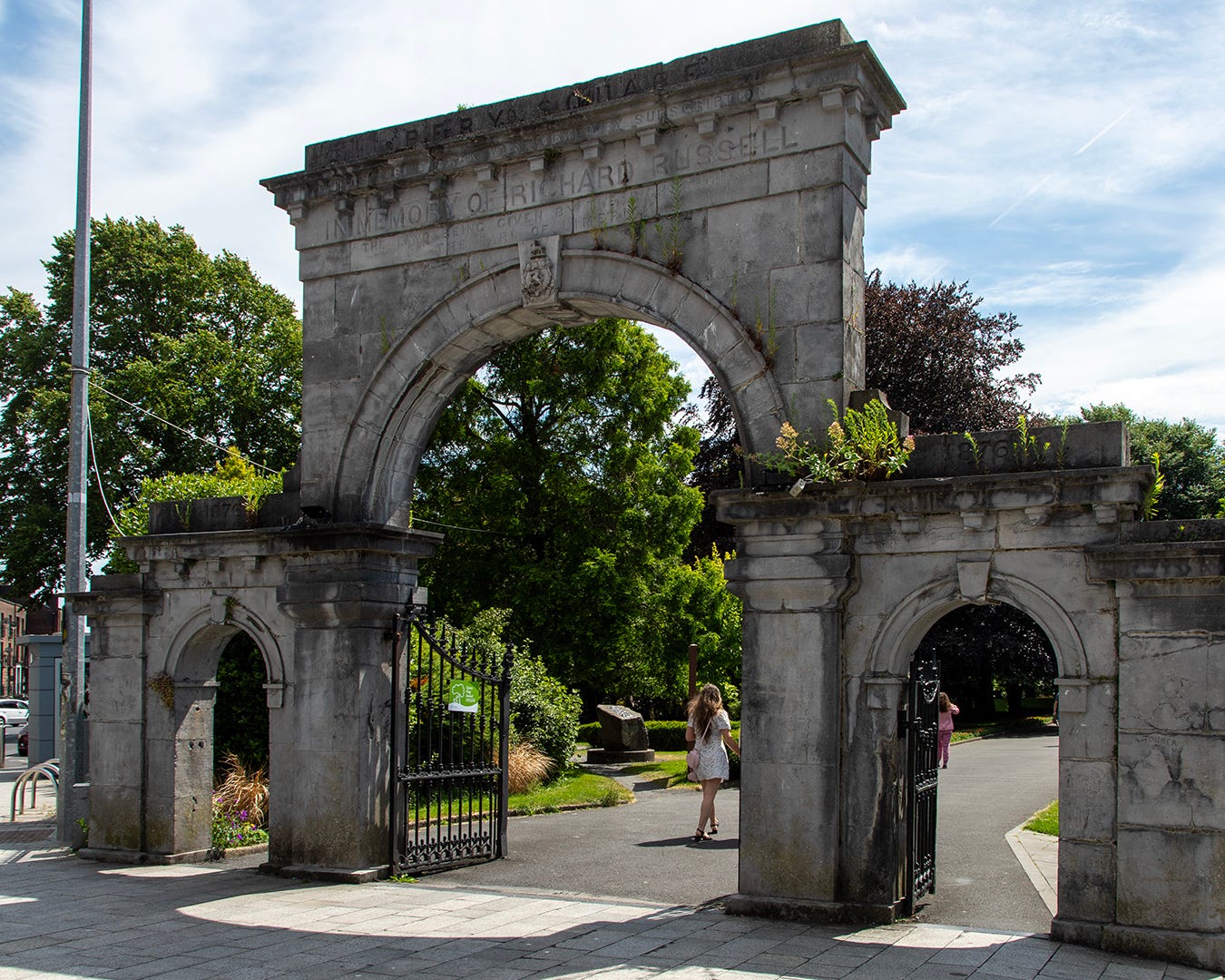
Today, this park is a gem. It encompasses Georgian and Victorian features in a relatively modest footprint, it has many original architectural features, well kept planting (on the jolly, colourful spectrum typical of municipal parks departments) and an excellent collection of mature trees. An original archway in the northwest corner – dedicated to Richard Russell, a member of a local flax-milling family who presumably stumped up some cash – provides a fine entrance feature, next to which is Limerick City Art Gallery, a solid Victorian affair with sympathetic extensions in the international modern gallery style. Beyond the art gallery, there is a row of mature copper beech trees2 on the park’s western boundary complimenting the original late Georgian terrace across the thoroughfare now known as Pery Square. It is just one short street now, its name an echo of its originally intended grandeur.
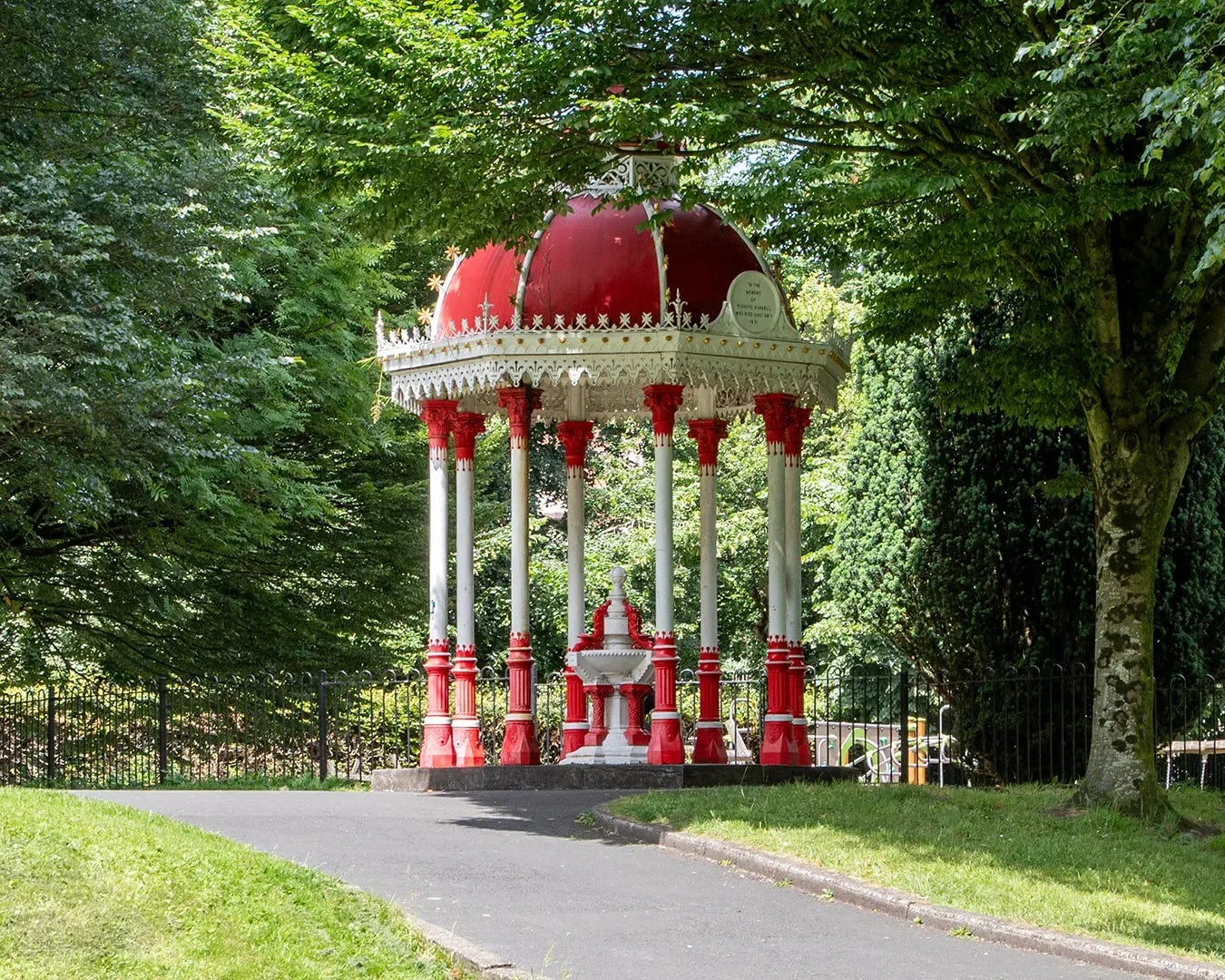
The original garden square can be traced by raised mounds enclosing a circular path and rose beds around a central hillock on which the Spring Rice Monument stands. It is an impressive focal point. Elsewhere, there is a splendid 1895 cast iron bandstand, painted red and blue; a pair of attractive gazebo-like pavilions and a rare and very ornate cast iron water fountain. This last feature, sporting a date plaque of 1871, was restored in the early 2000s and has been well looked after since, it has a particularly fetching paint job in scarlet and white with gold highlights picked out around its dome. I assume this must be the original palette which may also have informed the bandstand colours.
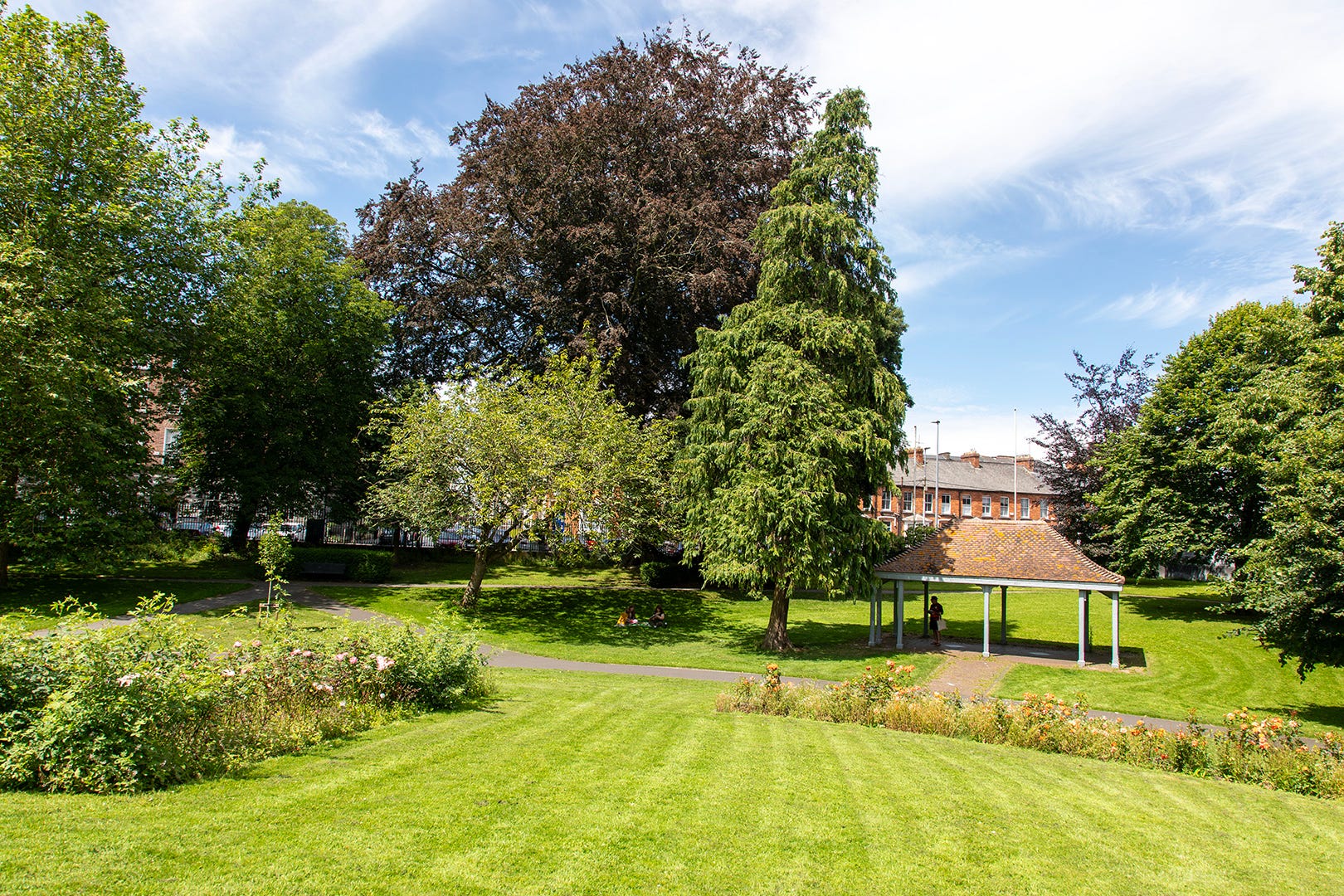
Trees are a particular feature of the park, and some will be original plantings from the 1870s. Beeches are the most eye-catching, particularly the copper beeches, but there are regular, green-leaved specimens of Fagus sylvatica too. Other old trees include plenty of limes, including a short avenue, and a single London plane. Among the younger trees I noticed a couple of maturing elms. I couldn’t be sure of which type they are, but it is always pleasing to see healthy elms. More modern plantings include a lovely paper birch (which on my first visit in 2022 had a bench around it, but in 2026, it is no longer there), a Persian ironwood and a thriving dawn redwood. Fastigiate hornbeams make up the canopy, a cultivar which seems to have been very popular throughout Ireland in the late twentieth century judging by its frequency, it is a common Dublin street tree for instance. A final mention should go to a lovely old, white flowering cherry tree by the twenty-first century Pery Gate. Perhaps it is a Yoshino, but I only have Google Streetview3 to go on which shows it flowering in March.
People’s Park details
Visit: People’s Park, Pery Square, Limerick V94 E67F, Ireland
Community: Visit Limerick
Managed by: Limerick City Council
More about the Spring Rice Monument on the Buildings of Ireland website https://www.buildingsofireland.ie/buildings-search/building/21517287/peoples-park-pery-square-upper-mallow-street-limerick-limerick
The most impressive tree, next to the art gallery is the Limerick Copper Beech which appears in my book Tree Hunting. The People’s Birch is another fine tree in the park and also features in the book.
Google Streetview from March 2022 https://maps.app.goo.gl/xUJ6xo9BvFq2kJcDA
Hope you had a lovely visit! If you're still here try to say hello to the tree at Brigid's Well in Kildare town.
We very much enjoyed our stay in Limerick several years ago which included visits to the park, the gallery, and the museum now housed in a part of the terrace.